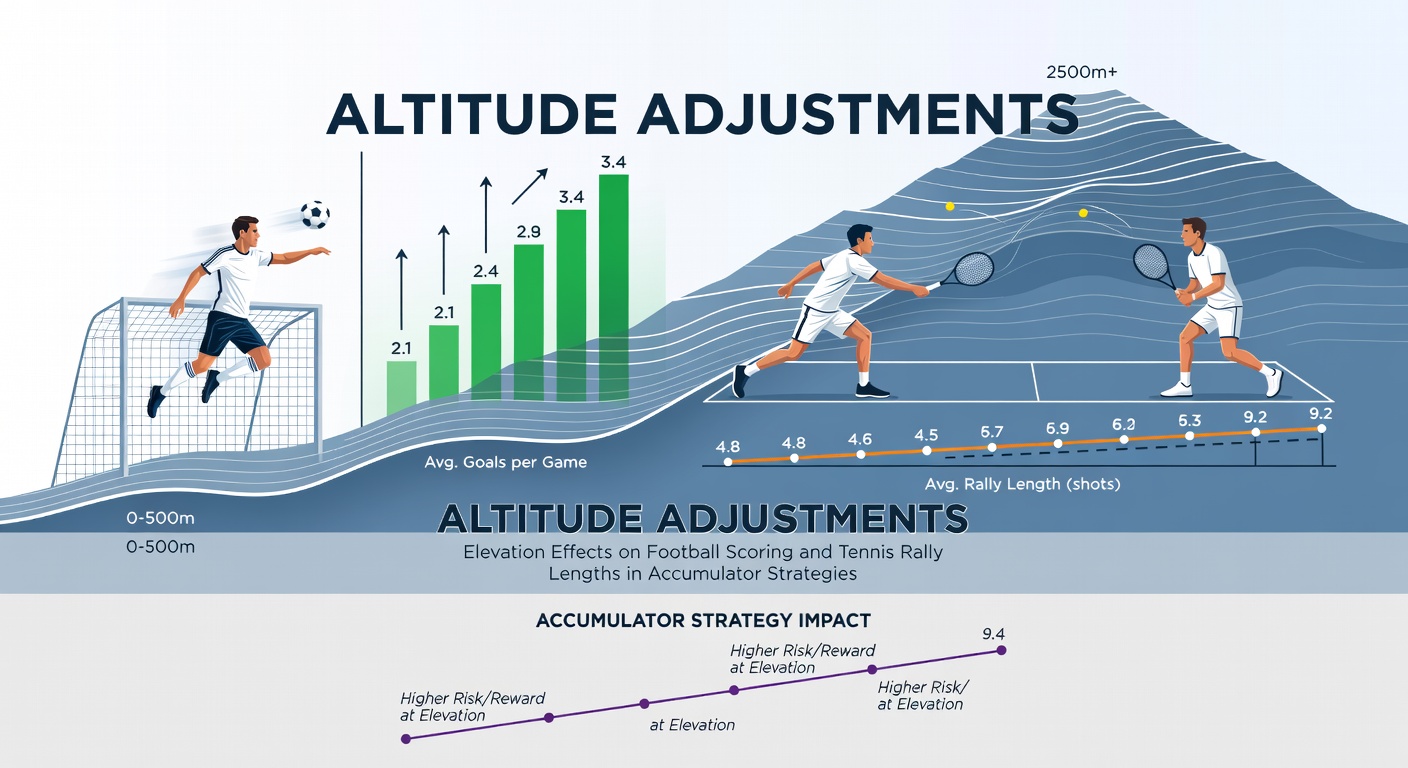
Altitude Adjustments: Elevation Effects on Football Scoring and Tennis Rally Lengths in Accumulator Strategies
High elevation venues alter ball flight and player endurance in measurable ways that shape accumulator selections across football and tennis markets. Data collected from matches played above 2,000 meters shows consistent patterns in scoring rates and rally durations, patterns that bettors incorporate when building multi-leg wagers. Observers note that thinner air reduces drag on the ball, allowing it to travel farther and faster while also accelerating fatigue in athletes unaccustomed to reduced oxygen levels.
Football Scoring Patterns at Elevation
Stadiums situated at significant heights produce elevated goal tallies compared with sea-level fixtures. Records from Bolivian league games at La Paz, roughly 3,600 meters above sea level, indicate teams average 3.2 goals per match versus 2.7 at lower venues. The effect stems from reduced air density, which lets passes and shots cover extra distance before dropping. Researchers at the University of Colorado documented similar increases during international fixtures held in the Andes, where visiting sides often struggle to adapt within the first 30 minutes.
Defensive lines sit deeper because clearances carry farther, opening space behind fullbacks for counter-attacks. Midfielders cover less ground before the ball reaches the final third, resulting in quicker transitions and more shots inside the box. Accumulator builders tracking these venues frequently select over 2.5 goals lines when one side hails from a lowland region, since acclimatization windows remain short during midweek travel.
Tennis Rally Length Variations
Tennis balls behave differently once elevation exceeds 1,500 meters. Lower air resistance allows serves and groundstrokes to maintain speed longer, shortening average rally length by 15 to 20 percent according to ball-tracking data gathered at tournaments in Bogotá and Johannesburg. Players generate higher bounce on second serves, which reduces the number of extended exchanges beyond eight shots.
Baseline rallies give way to more aggressive net approaches because the ball skids through the court faster. Returners therefore face higher first-strike percentages, shifting point-construction patterns toward shorter, higher-risk sequences. Those constructing accumulators on set totals or game spreads factor these changes when matches occur at altitude, often favoring under totals on total games played in opening sets while the server establishes early dominance.
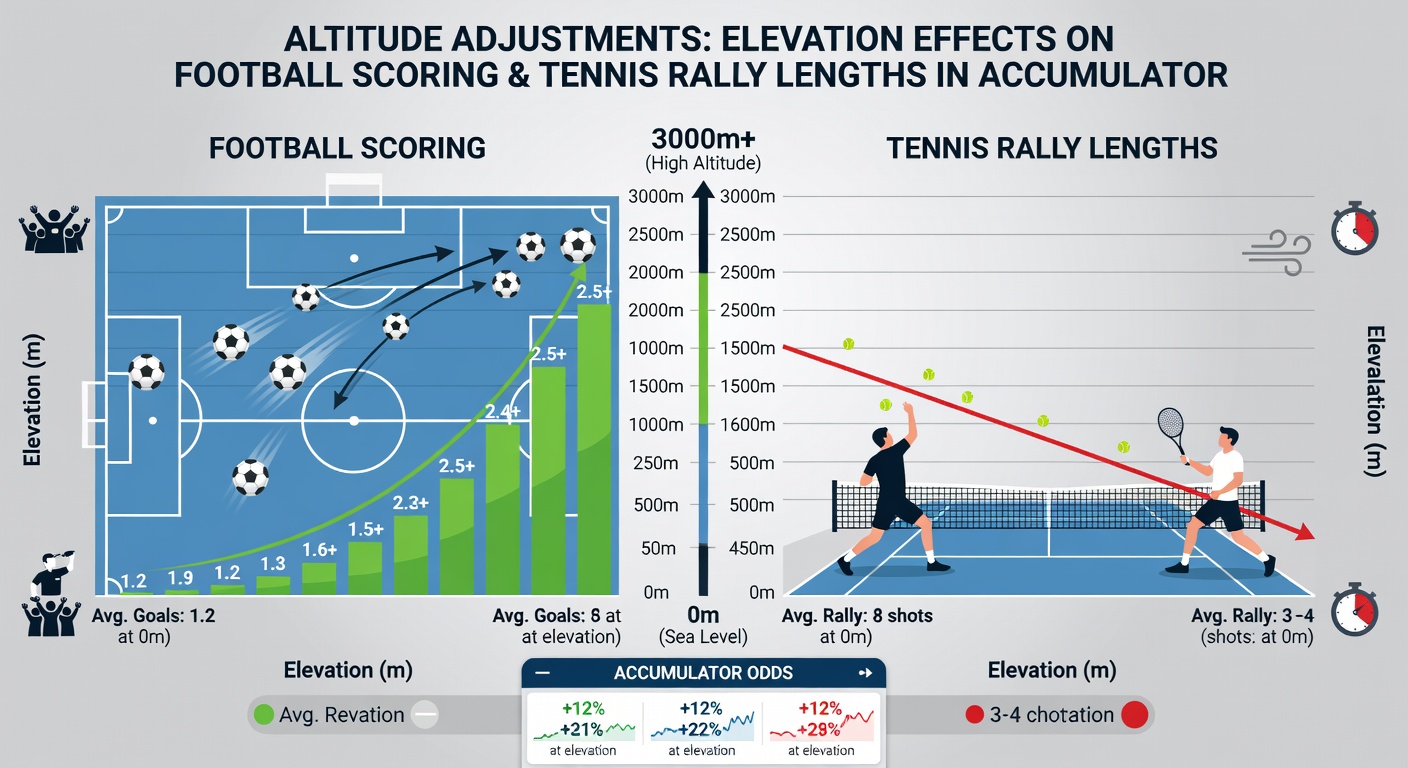
Accumulator Construction Using Elevation Data
Bettors combine football goal lines with tennis game totals when fixtures share similar altitude profiles. A June 2026 schedule that includes Copa Libertadores matches in Quito paired with ATP events in the same city allows for cross-sport legs built around the same environmental variable. One common structure selects over goals in the football fixture while taking under games in the tennis opener, since both outcomes trace back to faster ball travel and quicker points.
Travel fatigue compounds these physical effects. Squads arriving less than 48 hours before kickoff post lower possession numbers and concede more shots from distance. Tennis players on tight turnaround schedules between cities at contrasting elevations show measurable drops in second-serve win rates. Accumulator models therefore layer an additional leg on player-specific props, such as under first-serve points won when a low-altitude specialist faces a high-altitude venue without sufficient recovery time.
Regional Examples and Data Sources
Matches hosted by clubs in the Andean league demonstrate repeatable scoring spikes that persist across multiple seasons. Figures released by the South American Football Confederation highlight a 12 percent rise in goals scored at venues above 2,500 meters compared with coastal stadiums during the same campaign. In tennis, performance analytics from the Australian Institute of Sport confirm that rally duration decreases measurably once courts sit above 1,800 meters, with the largest compression occurring on hard surfaces where the ball already travels quickly.
These datasets feed into live accumulator adjustments when weather or scheduling alters expected conditions. A sudden temperature drop at altitude further reduces air density, amplifying the distance the ball travels, while humidity increases can partially offset the effect. Modelers monitoring these variables refine totals between sets or halves, maintaining exposure across both sports within the same slip.
Conclusion
Elevation remains a stable variable that influences ball physics and athlete output across football and tennis. Accumulator strategies that incorporate venue height, travel schedules, and surface type produce repeatable edges when supported by historical match data. Continued collection of tracking statistics from high-altitude competitions will refine these inputs, allowing precise calibration of goal and game totals as fixtures unfold.