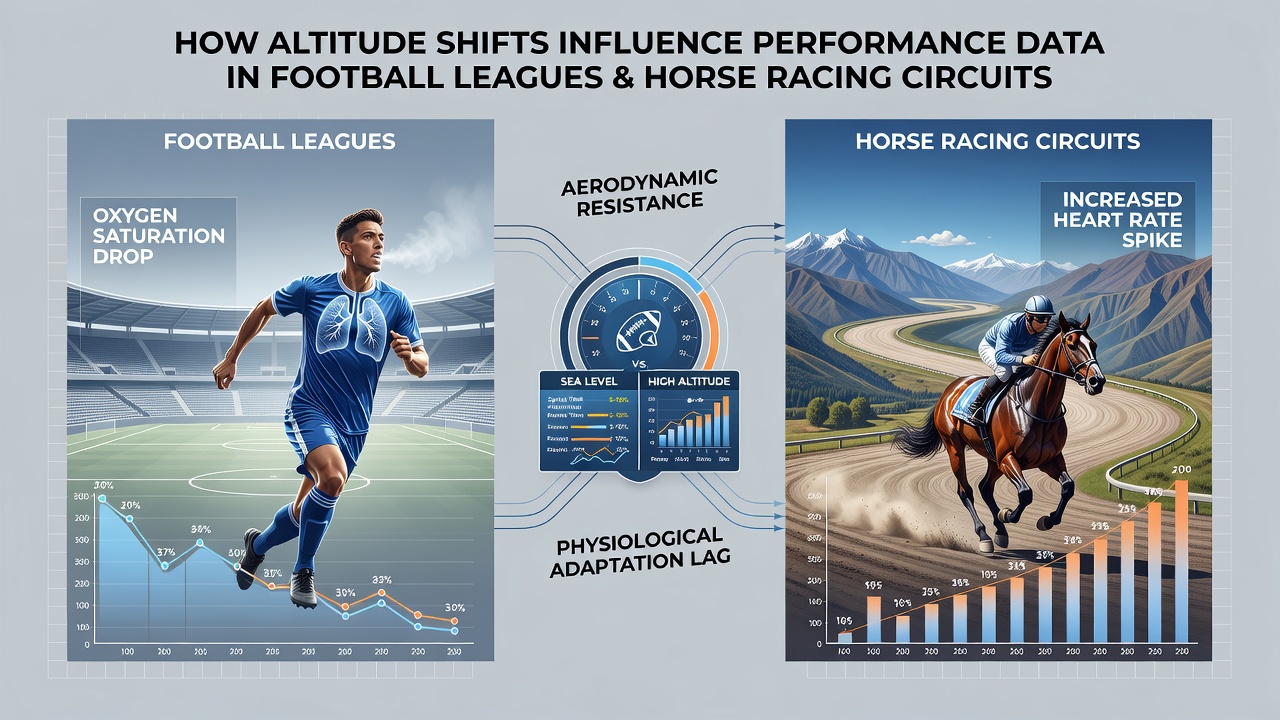
How Altitude Shifts Influence Performance Data in Football Leagues and Horse Racing Circuits
Understanding Altitude Effects on Athletic Output
Altitude changes alter oxygen availability, which directly shapes performance metrics across football leagues and horse racing circuits, and researchers track these shifts through heart rate variability, sprint distances, and recovery intervals. Data collected from matches at elevations above 1,500 meters reveals reduced aerobic capacity, while lower-lying venues show steadier endurance readings. Studies from institutions such as the University of Calgary have documented how partial pressure of oxygen drops approximately 10 percent for every 1,000-meter gain, leading teams and trainers to adjust training loads accordingly.
Football leagues operating in varied terrains compile season-long datasets that highlight these patterns, and analysts compare player tracking statistics from highland clubs against those based near sea level. In August 2026, several South American competitions resumed with updated GPS and wearable sensor protocols that capture real-time adjustments during fixture swings between coastal and mountain venues.
Football League Data Patterns at Elevation
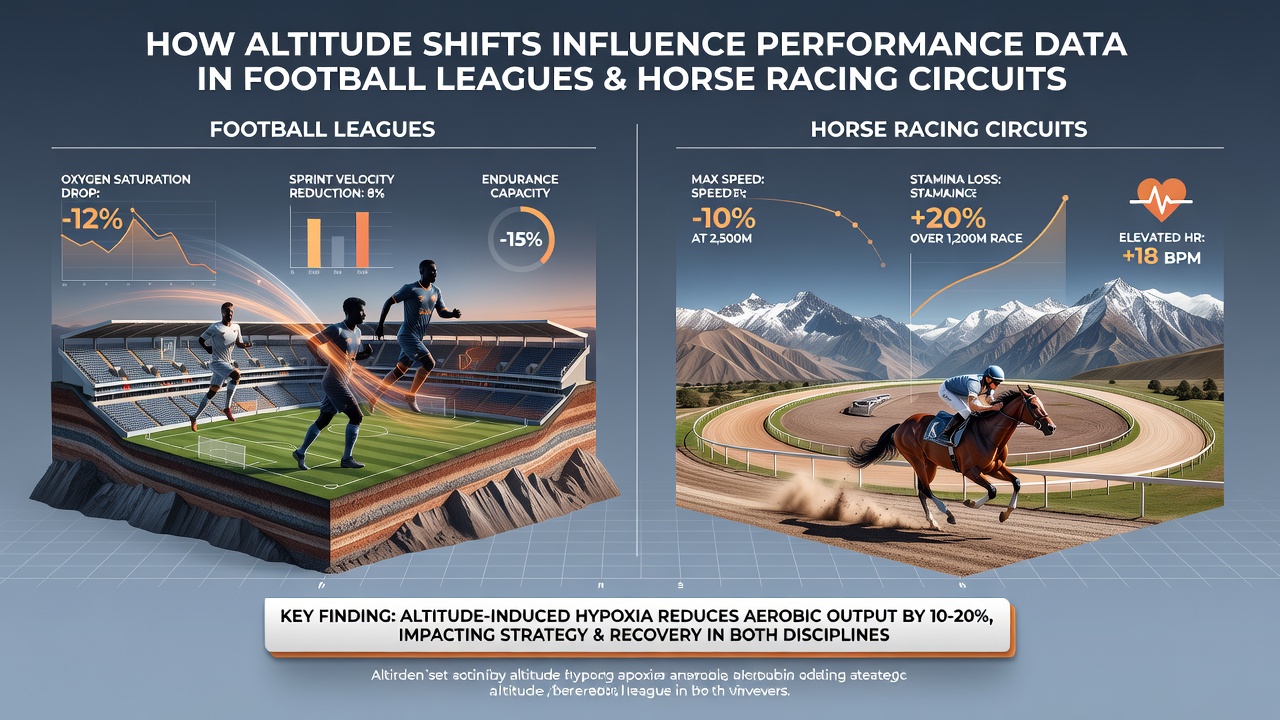
High-altitude venues such as those in Bolivia and Ecuador produce measurable declines in total distance covered during the second half of matches, and league reports indicate average reductions of 8 to 12 percent compared with games played below 500 meters. Midfielders and forwards register the largest drops in high-intensity runs, while defensive units sometimes maintain tackle success rates because lower ball speeds reduce the need for rapid recovery sprints. European clubs traveling to these sites for continental ties collect baseline blood oxygen saturation figures before departure, allowing medical staff to monitor acclimatization curves over the first 72 hours.
Performance databases maintained by confederations show that home sides at altitude convert a higher percentage of possession into shots on target during the opening 30 minutes, and visiting teams often see pass completion percentages fall once fatigue markers rise. Training studies conducted by Australian sports science groups demonstrate that repeated sprint ability recovers faster when squads incorporate hypoxic tents weeks before travel, yet match-day statistics still reflect the persistent gap in sustained output.
Horse Racing Circuits and Altitude Metrics
Racing circuits situated at different elevations record distinct finishing times and stride patterns, and industry datasets from North American tracks illustrate how horses competing above 2,000 meters exhibit earlier lactate accumulation. Trainers monitor post-race blood samples to quantify these shifts, and figures from circuits such as those in Colorado and South Africa indicate that winning margins narrow when fields include runners acclimatized to thinner air. Jockeys report that horses maintain stride length longer on uphill sections at altitude, yet overall race times lengthen by roughly 2 to 4 seconds per furlong compared with equivalent distances at sea-level tracks.
Breeding and performance registries compile multi-year comparisons that link sire progeny records to elevation exposure, and data reveals certain bloodlines produce offspring with superior hemoglobin responses that translate into steadier speed figures across repeated starts. Circuit operators in August 2026 introduced new sensor arrays embedded in saddle cloths that stream respiratory rate and core temperature data directly to stewards, allowing officials to correlate environmental conditions with observed effort levels during live events.
Comparative Analysis Across Both Sports
Both football and horse racing rely on similar physiological markers when altitude changes occur, and cross-sport reviews published by the European College of Sport Science note parallel drops in maximal oxygen uptake once athletes exceed 1,800 meters. Football players and racehorses alike display elevated resting heart rates during the initial days at new elevations, while peak velocity metrics decline until acclimatization stabilizes. League and racing authorities maintain separate but compatible databases that allow statisticians to model expected performance deviations based on venue elevation profiles.
Travel schedules in international calendars increasingly account for these variables, and medical teams apply standardized protocols that include staged ascent and nutritional adjustments to mitigate early performance dips. Observers note that recovery timelines differ by sport because football demands repeated directional changes whereas horse racing emphasizes linear sustained effort, yet both datasets underscore the value of altitude-specific conditioning programs.
Conclusion
Performance data gathered across football leagues and horse racing circuits demonstrates consistent responses to altitude shifts, and governing bodies continue to refine monitoring systems that capture these effects with increasing precision. Continued collection of sensor-driven metrics supports evidence-based scheduling and preparation strategies for participants at every level.