Jet Lag Impacts on Squad Cohesion Across Basketball Tours and Tennis Circuits
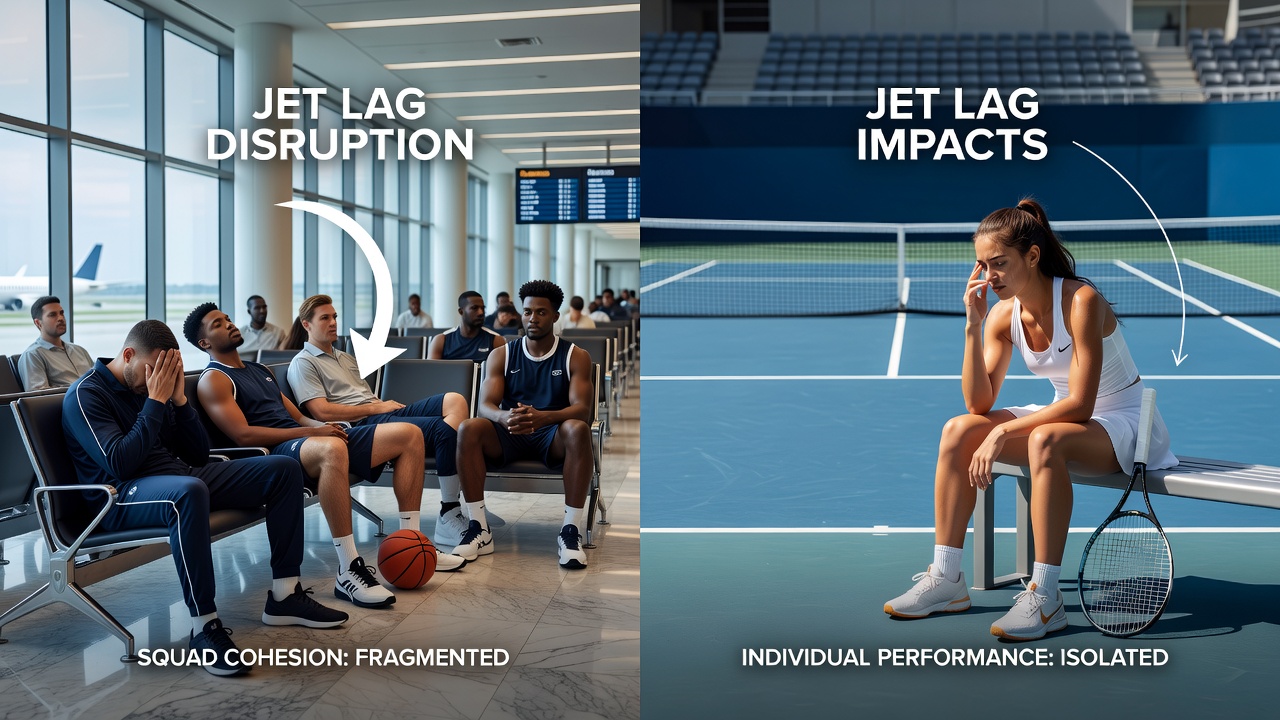
Research indicates that transmeridian travel disrupts circadian rhythms in athletes, leading to measurable declines in physical coordination and cognitive function that extend beyond individual performance into group interactions. Data from sports science studies reveal that sleep disruption from jet lag affects hormone regulation and reaction times, which in turn influences how team members communicate and synchronize during practices and matches. Observers note that these effects compound when squads cross multiple time zones, as recovery periods shorten and collective routines break down. Basketball tours present unique challenges because they involve coordinated plays that rely on shared timing and trust among players. Studies conducted by university research teams show that groups traveling eastward experience greater synchronization issues than those heading west, since the body's natural adjustment favors phase delays over advances. In the lead-up to June 2026 events, including several NBA exhibition series and FIBA qualifiers, teams have documented extended adjustment periods lasting five to seven days before full cohesion returns.How Circadian Disruption Affects Team Dynamics
Evidence suggests that fatigue from jet lag reduces verbal exchanges and non-verbal cues during training sessions, which are essential for maintaining defensive schemes and offensive sets in basketball. One analysis of professional squads found that error rates in passing sequences rose by approximately 12 percent in the first 48 hours after arrival, while mutual accountability conversations decreased. Those who have tracked these patterns across multiple seasons report that younger players often recover faster individually yet struggle more with integrating into established group hierarchies when the entire roster feels off-kilter.
Researchers discovered similar patterns in tennis circuits where support staff and doubles partners must adapt together. Although tennis features more solitary competition, the logistical demands of back-to-back tournaments create overlapping travel stresses that affect coaching interactions and recovery planning. Figures from the ATP and WTA tours indicate that players covering more than six time zones within a two-week window show elevated rates of miscommunication with their teams regarding match preparation and physical conditioning.
Basketball Tours: Collective Strain Under Pressure
Long-haul flights across continents force basketball organizations to compress preparation time, leaving little room for rebuilding interpersonal rhythms that underpin squad chemistry. Data collected during past EuroLeague and NBA international events reveal that teams maintaining strict light-exposure protocols and staggered meal schedules regain collaborative focus quicker than those relying on unstructured rest. In June 2026, several squads preparing for Asian and Australian exhibition games plan to implement earlier departure dates precisely to counter these documented cohesion lags.
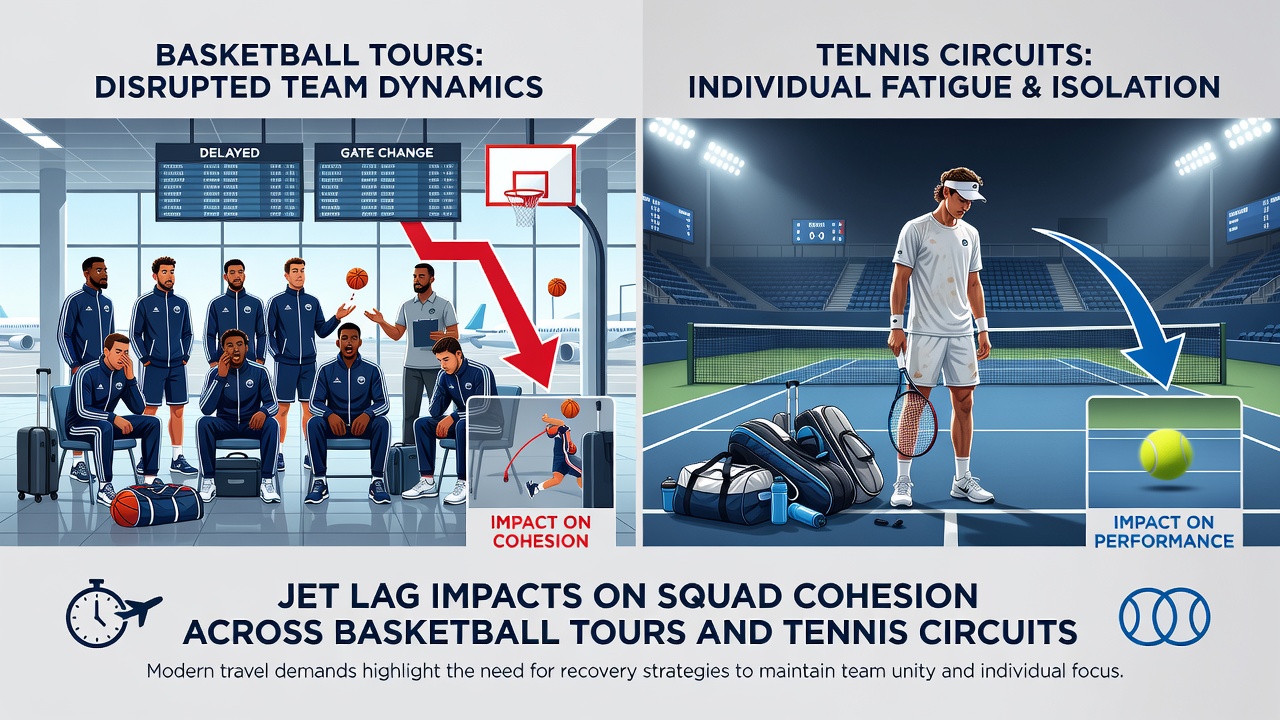
Case examples from previous tours illustrate how even minor misalignments in energy levels can cascade into broader tactical misunderstandings on the court. One study revealed that defensive rotations suffered most noticeably when multiple athletes reported fragmented sleep, prompting coaching staffs to adjust substitution patterns and shorten practice segments accordingly.
Tennis Circuits: Individual Pressures with Group Ripple Effects
Tennis schedules pack consecutive events into compressed calendars, meaning athletes and their entourages rarely achieve complete circadian realignment before the next departure. Research from sports medicine institutions shows that while singles competitors manage personal recovery more autonomously, the cumulative toll on support personnel can erode the quality of strategic discussions and emotional support networks. Observers tracking Grand Slam lead-in tournaments note that doubles teams, in particular, require synchronized adaptation to maintain effective court positioning and signal recognition.
Travel patterns in 2025 and early 2026 demonstrate that players crossing the Pacific or Atlantic repeatedly exhibit measurable drops in decision-making consistency during evening matches. Organizations such as the International Society of Sports Nutrition have compiled data linking consistent hydration and timed caffeine strategies to faster restoration of both individual alertness and team-level planning sessions.
Mitigation Approaches Backed by Evidence
Experts have observed that structured interventions, including pre-travel phase shifting and on-site light therapy, help squads restore group cohesion timelines by one to two days. Reports from the Australian Institute of Sport highlight successful use of individualized sleep monitoring combined with shared team activities to rebuild interpersonal trust during the adjustment window. These methods prove especially relevant for circuits that include mixed-climate destinations where environmental stressors compound jet lag effects.
Conclusion
Current records indicate that jet lag continues to shape both individual output and collective performance across basketball tours and tennis circuits, with effects most pronounced during rapid multi-zone transitions. Organizations increasingly incorporate physiological data into travel planning, yet complete elimination of cohesion disruptions remains elusive. As calendars advance toward June 2026 competitions, ongoing monitoring and refined protocols offer pathways to minimize these recurring challenges while preserving the integrity of team operations.