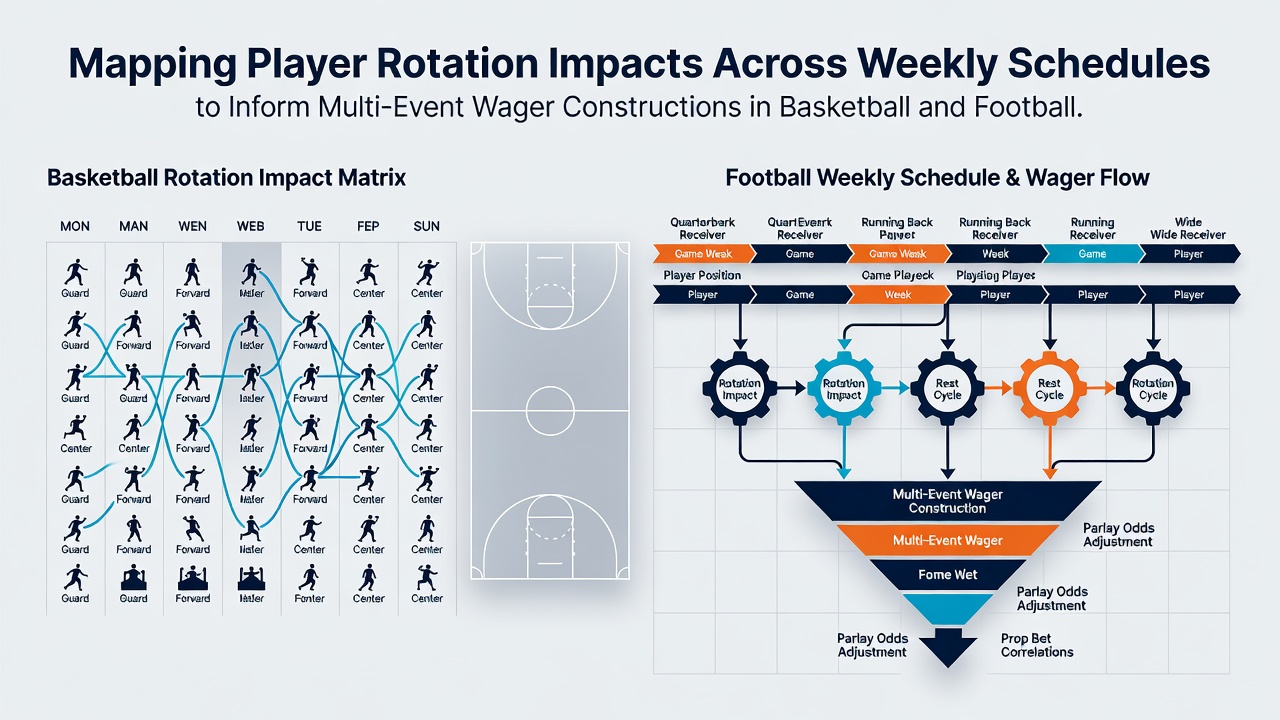
Mapping Player Rotation Impacts Across Weekly Schedules to Inform Multi-Event Wager Constructions in Basketball and Football
Coaches across professional basketball and football leagues adjust player minutes and lineups based on fixture density, travel demands, and recovery windows that shift from week to week. League data collected over multiple seasons shows that teams facing three or more matches in a seven-day period often reduce starter workloads by 12 to 18 percent compared with lighter weeks, according to figures released by the NCAA Athlete Wellness Research Group. These adjustments create measurable changes in team output that bettors track when building multi-event wagers spanning several days.
Weekly Schedule Patterns and Their Measurable Effects
Basketball schedules in the NBA and EuroLeague frequently cluster games on consecutive nights, while football calendars in top European divisions include midweek cup ties alongside weekend league rounds. Researchers tracking performance metrics have documented that back-to-back basketball contests produce a 4.8 percent drop in three-point accuracy for teams that played the prior evening, whereas football squads contesting matches within 72 hours record a 6.2 percent decline in high-intensity sprints during the second fixture. Such patterns repeat across seasons, giving analysts concrete data points for wager construction.
Rotation decisions compound these effects. Starters rested for the first half of a midweek game often return for the weekend, altering both starting lineups and expected point totals or goal tallies. Observers note that teams employing deeper benches during congested periods maintain higher overall win rates in the following match, yet their scoring margins narrow when key players remain on limited minutes.
Data Sources Used to Track Rotation Decisions
Official box scores, injury reports, and minute distribution tables supply the raw inputs for rotation mapping. In basketball, sites such as Basketball-Reference archive per-game minute logs that reveal when coaches shift to smaller lineups or increase bench contributions after heavy travel. Football equivalents include Opta and Wyscout datasets that log substitution timing and player workload indicators across domestic and continental competitions.
One study published by the University of Western Australia Centre for Sport Science examined 14 European football clubs over two seasons and found that squads rotating at least two outfield players after a midweek match achieved a higher points-per-game average in the subsequent league fixture than those that maintained the same starting XI. Similar patterns appear in basketball when teams rest two or more rotation players during the second night of a back-to-back set.
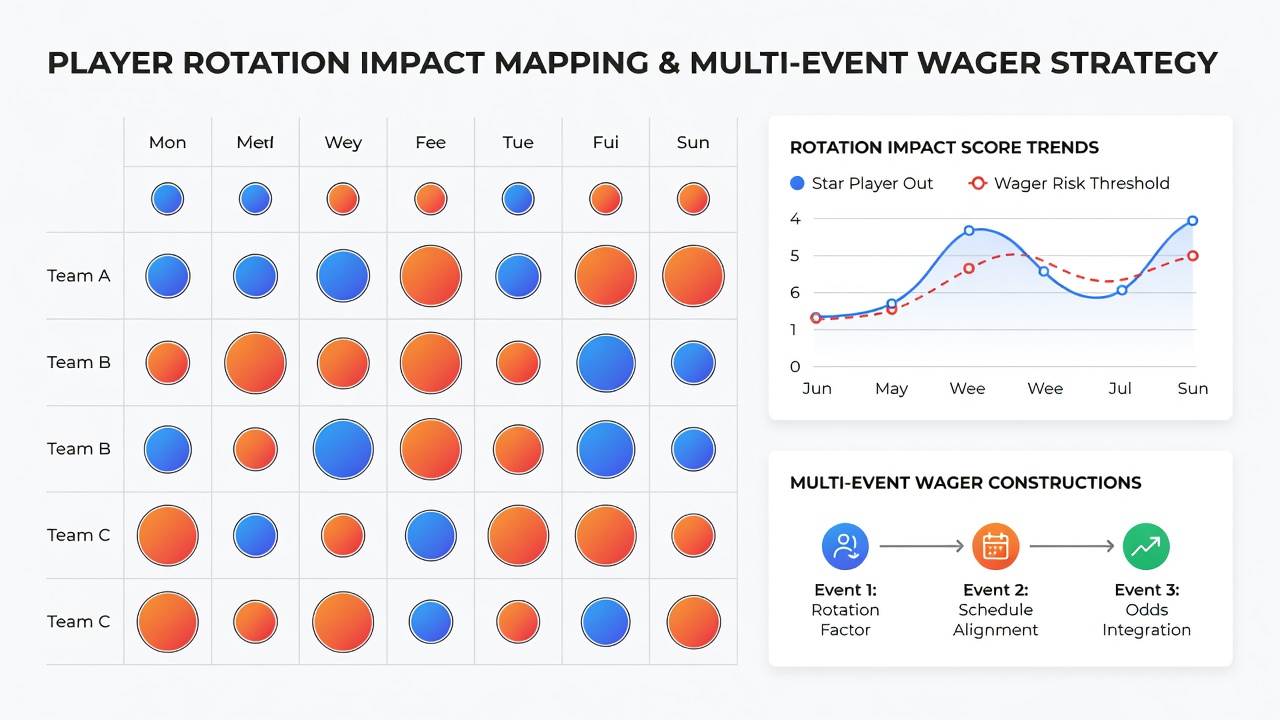
Constructing Multi-Event Wagers Around Rotation Signals
Analysts combine rotation data with schedule density to identify correlated outcomes across separate matches. For instance, when two basketball teams share a heavy travel week, both may post lower totals; pairing an under on one game with a reduced player-prop line on another creates a linked wager. In football, a side that rotates its attacking midfielders after a Champions League tie often generates fewer shots in the next domestic match, allowing bettors to link that fixture with another team experiencing similar rest patterns.
June 2026 presents a distinct window because several leagues schedule final rounds and playoff qualifiers within tight timeframes ahead of international windows. Historical records show that clubs with upcoming continental commitments reduce domestic minutes for key players in early June fixtures, producing repeatable statistical shifts that multi-event constructions can incorporate.
League-Specific Rotation Tendencies
European football managers tend to rest central defenders more frequently than wingers during congested weeks, whereas NBA coaches prioritize frontcourt minutes when back-to-back games occur on the road. These tendencies translate into different prop outcomes: football goal totals dip when centre-backs sit out, while basketball rebounding numbers fluctuate when power forwards receive reduced minutes. Tracking these positional preferences across weekly schedules supplies additional layers for accumulator construction.
Conclusion
Rotation mapping relies on verifiable minute logs, travel records, and performance metrics rather than speculation. By aligning those data streams with known schedule congestion points, bettors obtain structured inputs for multi-event selections that span basketball and football markets. Continued collection of league statistics through 2026 will further refine these correlations as calendars evolve.