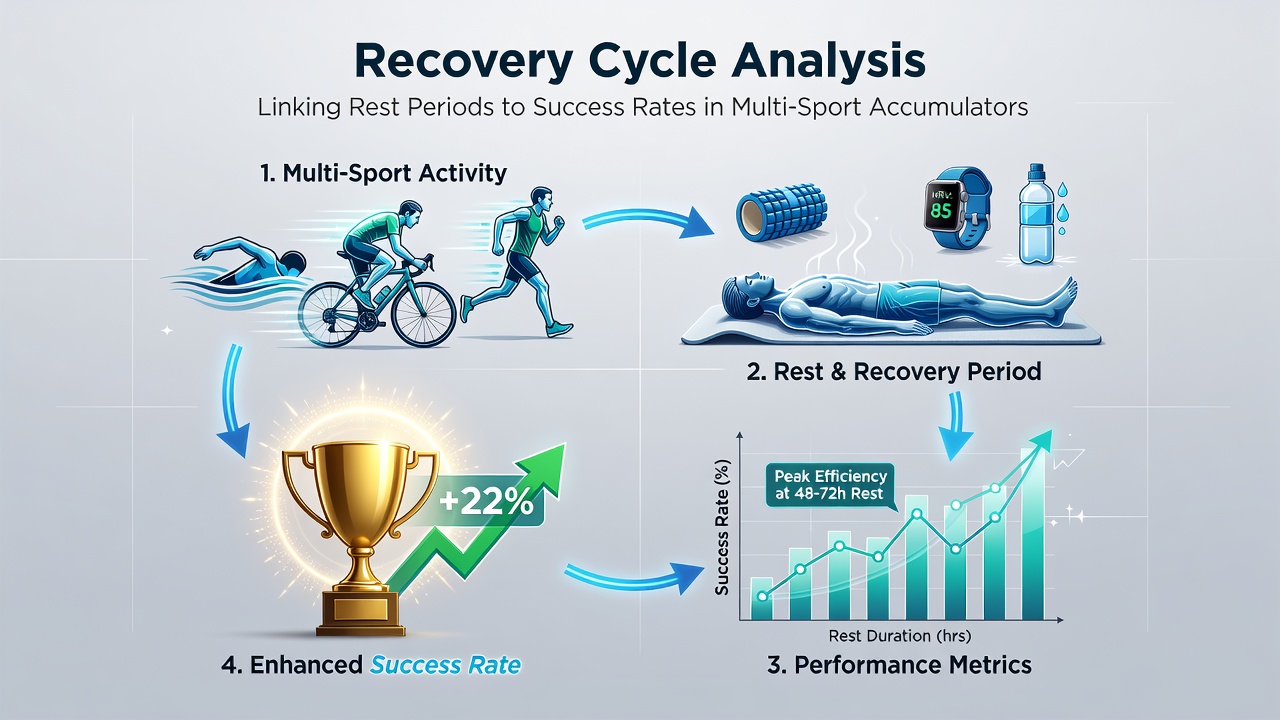
Recovery Cycle Analysis: Linking Rest Periods to Success Rates in Multi-Sport Accumulators
Recovery cycle analysis examines how intervals between competitions influence athletic output across multiple disciplines, and this framework has gained traction among those constructing multi-sport accumulator bets. Data from performance tracking systems reveal measurable patterns where rest duration correlates with win percentages in football, basketball, tennis, and other events that frequently appear in combined wagers.
Core Components of Recovery Metrics
Researchers track sleep duration, heart rate variability, and muscle soreness indicators to quantify recovery states before events. Studies compiled by the American College of Sports Medicine demonstrate that athletes averaging fewer than six hours of sleep per night over a three-day window show a 12 to 18 percent drop in key performance indicators such as sprint speed and reaction time. These figures become relevant when bettors evaluate legs of an accumulator that span consecutive days or overlapping schedules.
Application Across Different Sports
Football squads playing midweek fixtures followed by weekend matches often display reduced goal tallies when recovery windows shrink below 72 hours. Basketball teams traveling across time zones exhibit similar declines in three-point accuracy during back-to-back games, according to league-wide box score aggregates. Tennis players competing in consecutive tournaments without a full rest day record lower first-serve percentages, a statistic that directly affects set and match outcomes used in cross-sport betting chains.
Horse racing provides another data point: trainers who schedule runs with at least 14 days between starts report higher strike rates in sprint distances, while shorter gaps correlate with elevated non-finishing incidents. Observers compiling accumulator selections therefore cross-reference rest logs from multiple codes to identify combinations where recovery advantages align across events.
July 2026 Data Patterns
As of July 2026, summer league schedules in both European football and North American basketball have produced fresh datasets showing how extended off-periods during international breaks influence subsequent club form. Leagues that enforced mandatory rest protocols after major tournaments recorded average points-per-game increases of 0.4 compared with clubs that resumed play immediately. These shifts appear in historical betting records when accumulators include matches from the post-break period.

Multi-sport accumulators benefit when analysts align these windows. A bettor might combine a well-rested basketball side with a tennis player returning from a scheduled bye and a football team coming off a two-week international pause. Success rates for such selections rise when each component meets minimum recovery thresholds established through longitudinal performance studies.
Integration with Betting Models
Statistical platforms now incorporate recovery indices alongside traditional form and head-to-head metrics. Models published through the Australian Institute of Sport indicate that weighting rest variables improves predictive accuracy by 7 to 11 percent across tested datasets spanning three seasons. Bettors constructing accumulators apply these adjusted probabilities to determine stake sizing and combination viability rather than relying solely on surface-level win-loss records.
Real-world examples include sequences where a mid-season NBA team with four days between road games outperforms expectations against a squad playing its third contest in five nights. Parallel patterns emerge in tennis when players receive additional recovery following long-haul travel. These instances illustrate how recovery cycle data refines the selection process for multi-leg wagers.
Challenges in Data Collection
Obtaining consistent recovery information across sports presents logistical hurdles. Not every league publishes detailed training load figures, and private athlete monitoring systems limit public access. Nevertheless, aggregated anonymized datasets from governing bodies continue to expand, allowing researchers to refine correlation coefficients between rest intervals and competitive results. Those building accumulators therefore monitor league announcements and injury reports to infer recovery status when direct metrics remain unavailable.
Conclusion
Recovery cycle analysis supplies a measurable layer of context for multi-sport accumulator construction by linking documented rest periods to observable performance outcomes. Figures from multiple sports confirm that structured recovery windows produce repeatable advantages in scoring efficiency, accuracy, and completion rates. As datasets grow through 2026 and beyond, practitioners continue to integrate these variables into selection frameworks that combine football, basketball, tennis, and racing events into single wagers.