
Weather's Quiet Role in Shifting Probabilities for Evening Fixtures Across Leagues and Tours
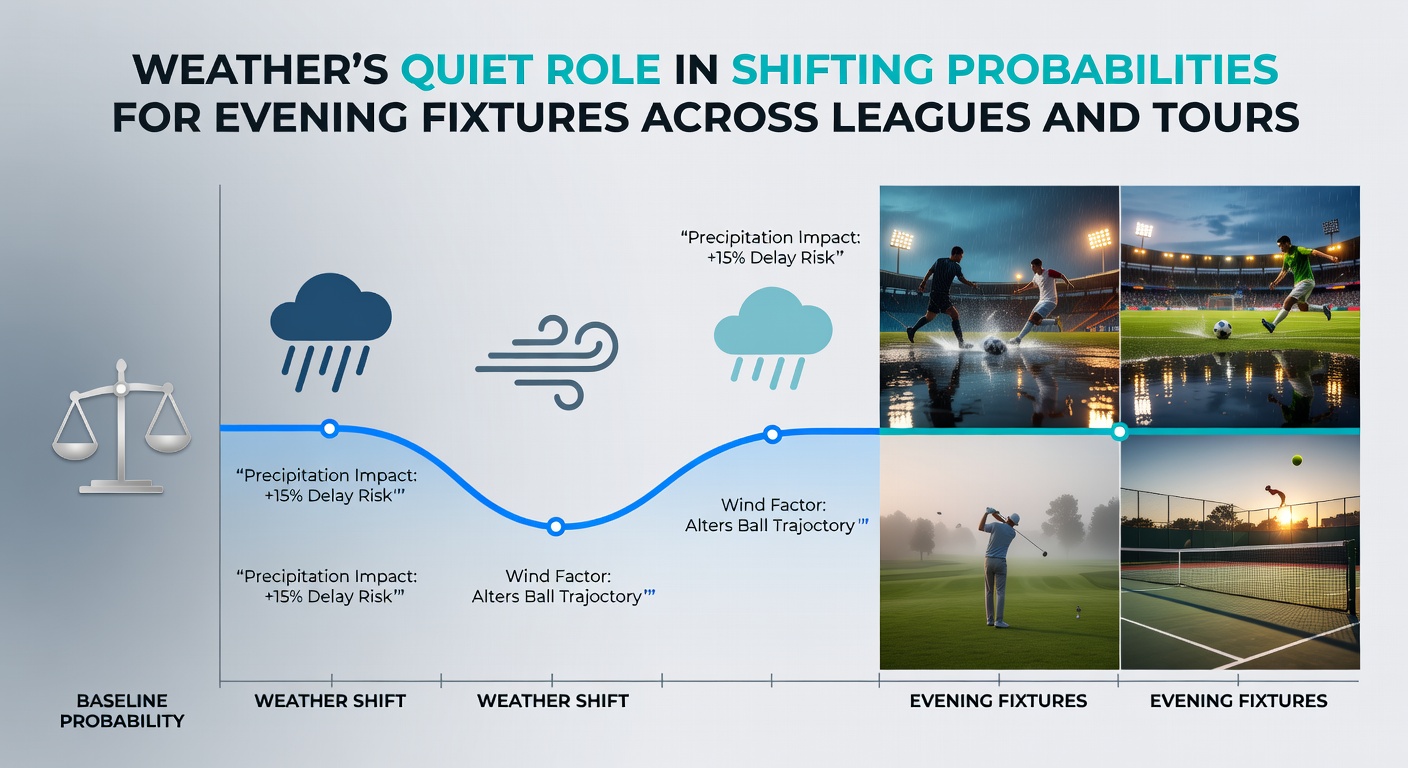
Evening fixtures present distinct conditions because temperatures often drop after sunset while humidity levels and wind patterns adjust across open stadiums and courts, and data from multiple meteorological agencies shows these changes alter ball trajectories, player movement efficiency, and surface grip in measurable ways. Observers tracking soccer matches note that dew formation on pitches accelerates in the hours after dusk, which modifies passing accuracy and increases slip risks during quick directional changes, whereas studies from the National Oceanic and Atmospheric Administration indicate that wind gusts strengthen in the evening due to cooling ground surfaces creating pressure gradients that affect long-range shots and crosses.
Soccer Leagues and Evening Pitch Dynamics
European domestic leagues schedule numerous evening kickoffs throughout spring and early summer, and records compiled by league statisticians reveal that matches played under cooling conditions display higher rates of defensive errors when relative humidity exceeds 70 percent because the ball absorbs moisture and travels with less bounce. In May 2026 several clubs across the continent will contest fixtures under variable evening skies as continental weather systems shift, and analysts reviewing historical datasets find that rain onset after 8pm local time correlates with adjusted goal expectation models since wet turf reduces sprint distances and favors teams accustomed to possession retention. South American competitions experience parallel effects during their winter months when evening dew combines with cooler air to slow ball speed on natural grass surfaces, prompting governing bodies to publish updated playing condition reports before each round.
Tennis Tours and Atmospheric Variables at Night
ATP and WTA events frequently extend into evening sessions on outdoor courts, and researchers at the Australian Bureau of Meteorology have documented how falling temperatures after sunset increase air density, which slightly reduces ball flight distance while simultaneously lowering string tension responses in player rackets. Night sessions at venues such as those in Melbourne and Indian Wells demonstrate measurable differences in rally lengths when dew points rise because the ball picks up surface moisture and loses its typical skid, forcing adjustments in topspin application. Data collected over multiple seasons shows tiebreak outcomes shift toward players who maintain consistent depth rather than those relying on aggressive angles once evening breezes develop along court perimeters.
Basketball Arenas and Microclimate Influences
Although most professional basketball occurs indoors, several international tournaments and exhibition series schedule evening games in partially open or coastal facilities where external humidity infiltrates ventilation systems, and performance metrics tracked by sports science groups indicate that elevated moisture content correlates with reduced three-point shooting percentages because grip on the ball changes. In May 2026 select FIBA qualifiers and summer league showcases will occur in regions experiencing transitional weather fronts, and facility operators monitor dew point forecasts to calibrate air handling units accordingly since even small shifts in arena humidity affect rebound trajectories and pass velocity. Observers reviewing box score aggregates across multiple seasons note that teams traveling from drier climates encounter adaptation periods lasting the first half when evening conditions introduce unexpected variables.
Horse Racing Circuits and Track Surface Responses
Evening meetings on turf and synthetic tracks respond rapidly to temperature drops because ground hardness readings decline as moisture condenses, and industry reports from Canadian racing authorities illustrate how these alterations favor horses with proven closing styles over early speed types once the surface firms or softens. Data collected at tracks in Ontario and British Columbia demonstrate that post-sunset wind patterns can influence jockey positioning choices in the final furlongs, and handicappers incorporate these factors into probability assessments when compiling entries for twilight cards. In May 2026 several circuits will host evening programs under seasonal transition weather, prompting track management teams to issue updated going reports that reflect cumulative effects of daytime sun followed by rapid cooling.
Integrated Effects Across Multiple Sports
Coaches and analysts across disciplines review unified weather datasets because patterns observed in one sport often translate to others when evening fixtures share similar geographic and temporal profiles, and cross-referenced studies indicate that wind direction changes after sunset produce comparable impacts on soccer set pieces, tennis serves, and basketball outlet passes. Regulatory bodies in North America and Europe now require standardized environmental reporting for evening events, enabling more precise modeling of outcome distributions, while training programs incorporate simulation modules that replicate humidity and temperature declines to prepare athletes for these recurring conditions.
Conclusion
Weather continues to register as a measurable factor in evening fixture outcomes across leagues and tours because temperature, humidity, and wind adjustments after sunset consistently modify equipment behavior and athlete execution, and organizations responsible for scheduling and officiating incorporate these variables into preparation protocols. Continued collection of granular environmental data supports refined probability assessments for future seasons.