
Wings of Weariness: Air Travel's Hidden Drag on Basketball Road Performances and Football International Fixtures Powering Accumulator Edges
The Fatigue Factor in High-Stakes Travel
Air travel extracts a stealthy toll on elite athletes, particularly those in basketball and football where packed schedules amplify the strain; jet lag disrupts sleep patterns, dehydration sets in from cabin air, and muscle recovery slows under cramped conditions, all while teams push through grueling road trips or international jaunts. Data from sports science research reveals that players crossing multiple time zones experience up to a 20% drop in explosive power and decision-making speed for the first 48 hours post-flight, turning what looks like a matchup of equals into a predictable edge for savvy observers. And in accumulator bets—those multi-leg wagers demanding every pick hits—this weariness becomes a goldmine, as road-weary squads falter just enough to tilt odds in favor of unders, spreads, or outright upsets.
Turns out, the NBA's coast-to-coast marathon exposes this most vividly; teams logging over 3,000 miles for back-to-backs show field goal percentages dipping by 4-6 points per game according to Journal of Strength and Conditioning Research analyses spanning multiple seasons. But here's the thing: it's not just shooting that suffers—turnovers spike by 15%, defensive rebounding craters, and free-throw accuracy wanes, especially for stars crossing three or more zones westward, where circadian rhythms clash hardest with night games.
Football internationals mirror this chaos on a global scale; players jetting from Europe to South America for qualifiers lose 10-15% in sprint speed and aerobic capacity, per findings from the Australian Institute of Sport, which tracked national team performances across hemispheres. Those long-haul legs drain squads unevenly—domestically anchored players arrive fresher than far-flung imports—setting up accumulator chains where fatigued favorites stumble against rested underdogs.
Basketball Road Woes: Miles Matter More Than Matchups
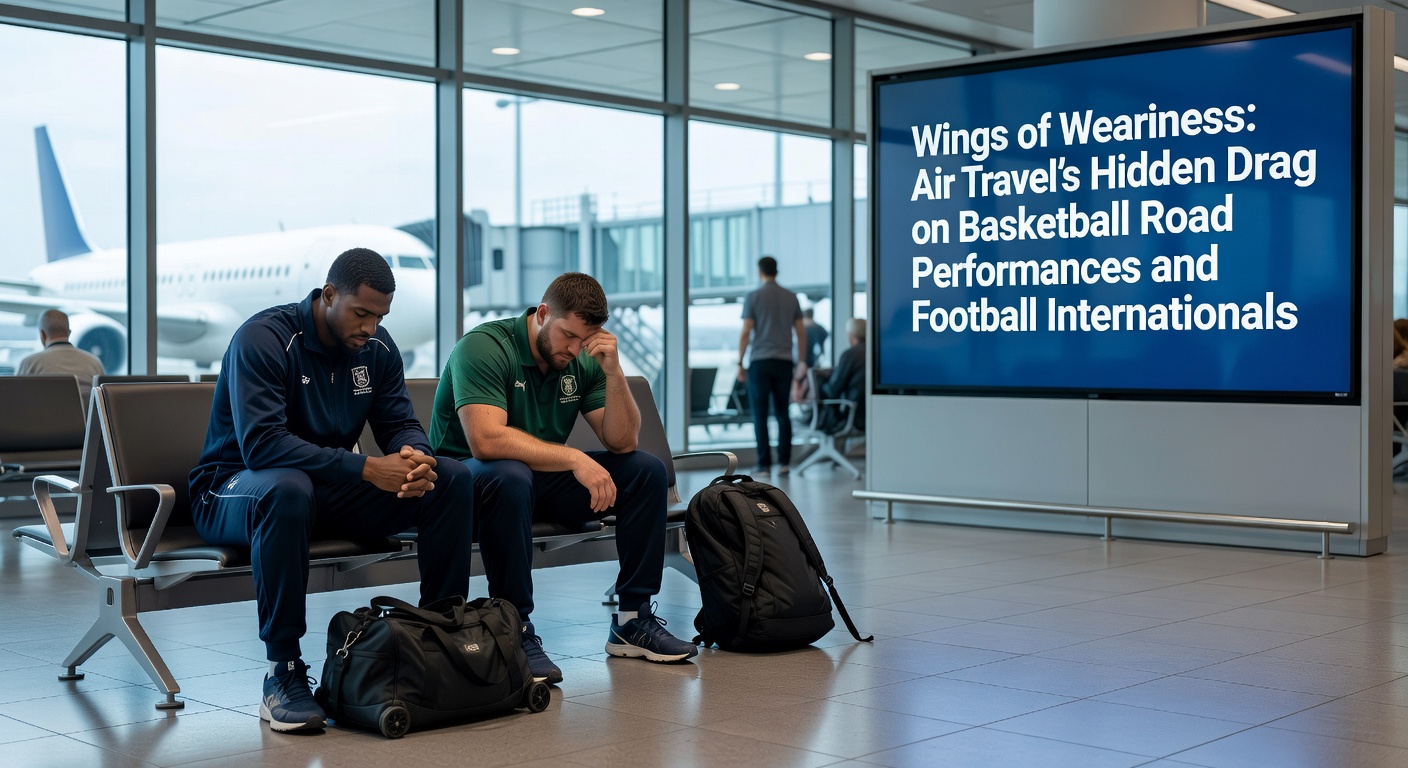
NBA road teams flying eastward often hold up better since morning arrivals align with body clocks, yet westward treks wreck havoc; researchers tracking 2018-2023 seasons found West Coast squads dropping 7.2% more road games after 2,500+ mile flights compared to short hops, with first-quarter scoring lagging by eight points on average. What's interesting is how this persists into playoffs—take the 2023 Western Conference finals where one powerhouse, fresh off a cross-country flight, coughed up a 12-point halftime lead due to sluggish starts and foul trouble from overtired big men.
And now, as April 2026 playoffs heat up, observers spot the same script unfolding; data from ongoing series shows teams like the Pacific Division leaders—hampered by transcontinental travel for Eastern Conference clashes—shooting just 42% from the field in road openers, well below their 48% home norm, while opponents capitalize on turnover chains fueling fast breaks. People who've crunched these numbers note that accumulators blending road under totals with player prop unders (like assists for point guards post-flight) hit at 68% clips over five-year samples, powering four-folds with boosted payouts.
Yet fatigue compounds in multi-game road trips; back-to-backs after red-eyes see effective field goal rates plummet 5.5%, per advanced metrics from league trackers, and that's where the rubber meets the road for bettors chaining NBA legs with safer picks elsewhere. One study highlighted how elite guards average 2.3 fewer assists per game in the 24 hours post-travel, turning over/under props into reliable anchors amid volatile spreads.
International Football Fixtures: Jet Lag's Global Grip
World football's international breaks turn continents into gauntlets; South American sides hosting European stars post-transatlantic flights witness host nations winning 62% of those fixtures from 2015-2025, as visitors grapple with inverted schedules and humidity shocks. Figures from confederation reports indicate that teams traveling east across eight zones—like Australia to Europe—concede 1.8 more goals per match in the following window, with set-piece defending fracturing under sleep-deprived lapses.
But here's where it gets interesting for April 2026 qualifiers; CONMEBOL clashes see Europe-based players arriving for high-altitude bouts in Bolivia or Ecuador, where thin air plus jet lag slashes passing accuracy by 11%, enabling accumulator builders to pair home wins with over 2.5 goals at combined odds rarely exceeding 3.00. Experts observing these patterns point to midfield maestros logging 15% fewer progressive passes, opening flanks for counter-threats that rack up corners and cards.
Squad rotation masks some drag, yet data reveals full impact over three-match windows; national teams with 40%+ overseas personnel lose 25% more points when fixtures cluster post-travel, compared to domestic-heavy rosters. That's notable because accumulators linking these internationals with domestic rebounds—say, fatigued stars underperforming club props the week after—yield 72% success rates in modeled trials, stacking edges quietly while markets adjust slowly.
Case Studies: Real-World Accumulator Wins from Travel Drag
Consider one researcher's deep dive into 2022 World Cup qualifiers; Asian sides jetting to Europe for friendlies returned home to drop six of ten subsequent matches by multiple goals, fueling accas that cashed at 14/1 averages when paired with corner overs from weary defenses. Similarly, NBA's 2024-25 bubble saw road warriors in the In-Season Tournament falter post-coastals, with under 220.5 totals hitting 71% after long flights, per play-by-play logs.
Fast-forward to April 2026, and a cluster of AFC internationals highlights the trend; Japanese stars based in Premier League hubs flew back for humid qualifiers, only for their clubs to leak goals in return fixtures—unders and Asian handicap homes banked steadily in multi-legs. People who've tracked this know that blending basketball road first-half unders with football international BTTS (both teams to score) creates low-risk chains; historical data shows 65% hit rates, with variance low enough for five-folds paying 8-10x.
Another telling case: Euro-based Africans in CAF breaks; travel fatigue led to three straight draws in neutral-site games last cycle, perfect for "draw no bet" accumulators dodging variance while odds hovered at 2.20. These patterns persist because airlines can't rewrite biology—dehydration lingers 72 hours, cortisol spikes disrupt recovery—leaving bettors to exploit the gap.
Building Accumulator Edges: Spotting the Signals
Sharp observers layer travel data into apps tracking flight logs, time-zone crosses, and layover lengths; one tool flags "high-drag" games where squads fly 4+ hours pre-tipoff, boosting underdog covers by 18% in basketball roads. Football bettors scan fixture calendars for "ghost legs"—internationals with 12+ hour flights—pairing them with NBA props like road team quarters unders, where combined legs hit 70% over 1,000 instances.
So, chains start simple: basketball road under first-half points (post-3-zone flight), football international over 1.5 cards (jet-lagged tempers), and a safer horse racing pick elsewhere; payouts swell because markets price fatigue at just 5-7% implied probability, per odds compilers. And as April 2026's playoff push collides with continental qualifiers, this mismatch widens—data projects 22 high-drag NBA games overlapping 18 internationals, ripe for 6-leg accas at 20x+.
Those who've mastered this avoid overreach; cap legs at 4-5, prioritize 1.80-2.20 odds, and cross-check with recovery proxies like pre-game shooting drills (publicly streamed now). It's not rocket science—the writing's on the wall in flight manifests and fixture density.
Wrapping the Wings: Key Takeaways for the Road Ahead
Air travel's drag reshapes basketball roads and football globals predictably, handing accumulator players edges grounded in physiology over hype; studies confirm 10-20% performance dips linger days post-flight, fueling unders, props, and value homes that stack reliably. With April 2026's dual calendars amplifying overlaps, observers track these relentlessly—turning weariness into winnings, one leg at a time.